The form of a representation cannot be divorced from its purpose and the requirements of the society in which the given visual language gains currency. –Stuart Piggott, Antiquity Depicted: Aspects of Archaeological Illustration
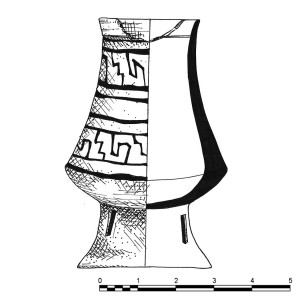
Throughout the history of archaeological illustrations, trends and advancements in illustration techniques have been closely tied with technological developments. From print making processes, to photography, to epigraphy documentation processes, archaeologists have promptly adopted advancements in technology to improve the visual record of their work, achieve more successful communication of their research, and maintain “currency with the visual language of society”. Digital 3D technologies make a combination of data gathering techniques possible in one product, helping to reduce the limitations of 2D visual documentation methods, such as perspective, occlusions, and human error, and produce more comprehensive representations. In addition, these technological processes can be employed for more than just documentation, creating reconstructions, interactive visualizations, and animations that hold research purposes and serve as engaging and immersive historical resources for the general public.
Limitations
Problems still exist within the results of 3D processes. Level of detail and accuracy is very dependent on the device and technology utilized, as well as the care of the operator. Resulting visualizations can show overly geometrized surface results, gaps, or false surface data. The structure of the object being documented can also highlight limitations of this process, as many 3D methods are not able to capture small interior spaces. Scale and the perception of size are additional features that relate to the issues of digital interface. In addition to technical limitations, digital visualizations are often criticized for their ability to alter the viewer’s perception, as one interacts differently with the interface of a screen than an object directly in front of them. Researchers are working to mitigate these and other limitations, from creating scale bars, to increasing data capture power, to investigating ways for viewers to be more immersed in visualizations.
Theoretical Discussion
Because of the approach’s emphasis on direct physical experience and sensory perception, phenomenology as an archaeological methodology has often been set in opposition to methodologies that utilize digital tools for observation, representation, and interpretation. Scholars who align with the experiential tenets of phenomenology are often opposed to the widespread use of representations of any kind in archaeological knowledge production, as well as the techniques used for capturing representative data in the field, arguing that representations and data gathering technologies create a “mediated”(1) experience with the produced knowledge.
However, the shift to 3D technologies in archaeological research brings a new dimension to representation and enables new types of experiential possibilities with an archaeological artifact or site. Three-dimensional representations align with the phenomenological goals of direct, immersive, and “hands-on” experience of sites and objects, while also making this type of approach to research more accessible to those who might not be able to travel to a specific site or directly handle certain objects. This shift from 2D to 3D “technologies of representation”(2) calls for a reassessment of the previous divergence between technology and phenomenology in archaeology. Digital devices and platforms represent commonplace objects and means of communication in today’s society. It remains indisputable that such technologies engender different ways of seeing and understanding than direct human perception, but the results of digital 3D experiences replicate as similar of an experience as possible, while also serving as hermeneutic and heuristic devices, facilitating experiential learning for broader audiences, and holding the potential to mitigate cultural heritage patrimony and conservation concerns
Do you agree? Do you understand the structure of the vessel better from the line drawing or the model?
Check out the Illustration Gallery to see the hand-drawn ceramic vessel diagrams completed during the course.
1. Christopher Tilley, Interpreting Landscapes: Geologies, Topographies, Identities; Explorations in Landscape Phenomenology 3, (Walnut Creek, Calif: Left Coast Press, 2012), 25.
2. Christopher Tilley and Wayne Bennett, The Materiality of Stone: Explorations in Landscape Phenomenology (Oxford ; New York: Bloomsbury Academic, 2004), 118-119.
